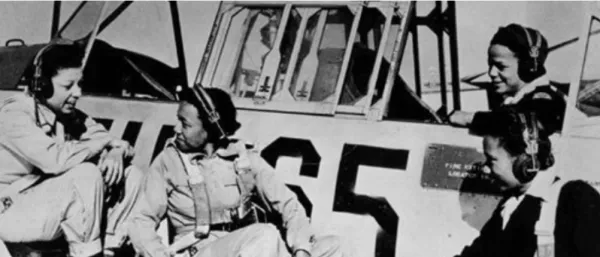
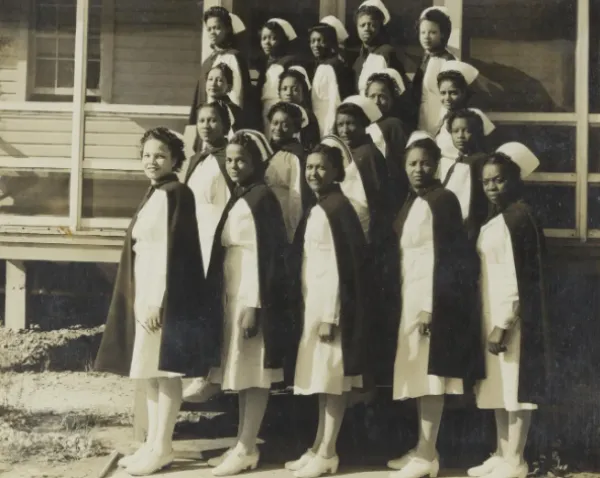
Black women in the United States Army Nurse Corps assigned to Tuskegee Army Air Field Hospital to assist pilots and cadets with physical and psychological needs. Part of their training included ground school instruction, though they did not fly during World War II. Circa 1943. Courtesy of Air Force Historical Research Agency via Smithsonian Institution.
March is Women’s History Month. It is also the month our nation honors the Tuskegee Airmen.
Nearly 1,000 pilots and approximately 14,000 military and civilian personnel were part of the Tuskegee program between 1941 and 1949. As the Tuskegee Airmen fought for their place in the skies, they were supported by a dedicated cadre of women whose work strengthened the mission every day.
At Tuskegee Army Air Field, women served in essential operational roles. They worked as Army nurses and administrative professionals, managing records, coordinating logistics, and ensuring that the base functioned with discipline and precision. Their work kept training schedules intact and daily operations moving.
In the medical wards, their responsibilities were especially demanding. Nurses treated training injuries, monitored recovery, administered care, and upheld Army medical standards within a segregated system that required them to demonstrate excellence every day. Their service required technical skill, steadiness under pressure, and leadership.
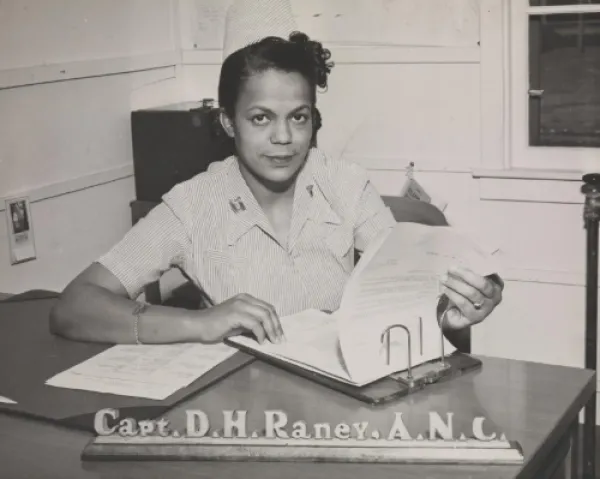
One of the most significant figures among them was Della H. Raney, the first Black nurse commissioned into the U.S. Army Nurse Corps. She rose to the rank of Captain and served as Chief Nurse at Tuskegee Army Air Field, where her leadership ensured professional medical care for the first generation of Black military aviators.
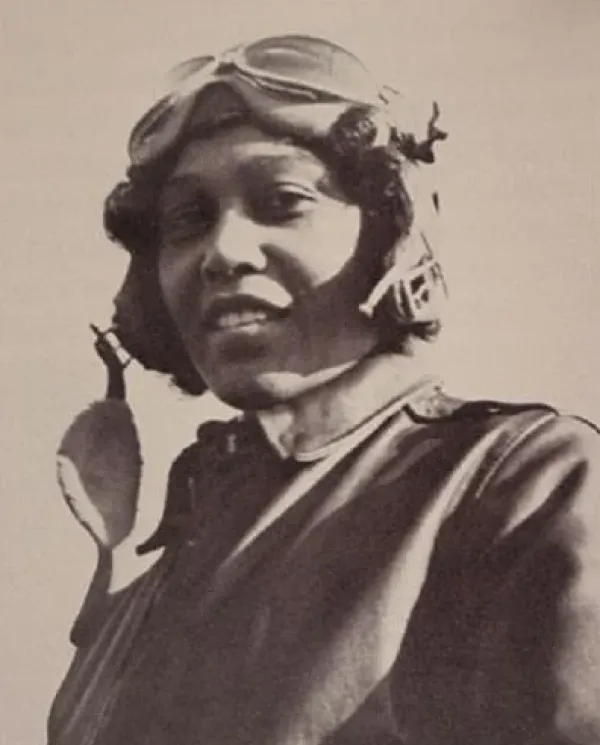
Beyond the base, Janet Harmon Bragg earned her commercial pilot’s license at a time when aviation access was rare for Black women. Though qualified and prepared, she was not admitted to the Women Airforce Service Pilots program during World War II because of segregation policies.
The Tuskegee era represents progress unfolding in stages — leadership within the system and determination pushing beyond it. Women strengthened operations, elevated standards, and expanded what future generations could imagine.
At Rickenbacker Woods Foundation, we celebrate that legacy as inspiration. The women connected to Tuskegee remind us that leadership takes many forms — in care, in coordination, in preparation, and in persistence.
Their strength helped lift a generation.
And their example continues to move us forward.
Michael Aaron is the President & Executive Director of the Rickenbacker Woods Foundation.